Welcome to Gary F. Jones w/ #mystery #book ‘Doc’s Codicil’ @Sedentatus @GoddessFish

vbt_tourbanner_docscodicil

Today we have author Gary F. Jones visiting. Welcome!

What would you like to tell readers about yourself?
mediakit_authorphoto_docscodicil

* According to Gary Jones, his life has been a testament to questionable decisions and wishful thinking. His wife of forty years, however, says she knows of nothing in the record to justify such unfettered optimism. Jones says the book is a work of fiction; that’s his story, and he’s sticking to it.
* He’s part of the last generation of rural veterinarians who worked with cows that had names and personalities, and with dairymen who worked in the barn with their families. He’s also one of those baby boomers, crusty codgers who are writing their wills and grousing about kids who can be damned condescending at times.
* Gary practiced bovine medicine in rural Wisconsin for nineteen years. He then returned to graduate school at the University of Minnesota, earned a PhD in microbiology, and spent the next nineteen years working on the development of bovine and swine vaccines.
* Doc’s Codicil is the bronze medal winner of Foreward’s INDIEFAB Book of The Year awards, humor category.

Today Gary F. Jones will be talking about the best and worst pieces of writing advice he ever received.
* The best advice I’ve been given on writing is to state what I want to state as clearly and as concisely as I can. That can only be done if I use words with economy and precision. To write with precision requires that the most suitable noun or verb be used. That avoids the temptation to overuse adjectives and adverbs. A rule of thumb I’ve used is that use of more than one adverb or adjective per verb or noun should be unusual and use of three rare.
* Economy requires that the writer limit descriptions to what the reader needs to imagine the setting, to advance the plot, or to flesh out a character, and do so efficiently. Don’t describe the same thing repeatedly, don’t be redundant, don’t describe the common or mundane unless it’s critical to the plot, don’t use unusual words when a commonly used word is suitable, and don’t describe what readers should assume. Let them use their imaginations.
* Economy also avoids use of filler words, words that add nothing to the meaning of a sentence. For example, avoid writing that a seated character “stood up.” Is there a difference between standing and standing up? Other words that frequently add nothing to a sentence include, “all,” “any,” “very,” “really,” “then,” “suddenly,” “just,” “over,” and “so.”
* Economy requires that there be tension or conflict in dialogue and that the dialogue leads to a decision or resolution. Cut the chit-chat. Don’t use tags when it’s clear from the context who is speaking, and use words other than “said” or “asked” sparingly in dialogue tags. Use context whenever possible to describe how the dialogue was spoken. Use contractions liberally, especially in dialogue. It’s not only more efficient, it’s also closer to natural speech.
* I think the worst piece of advice I’ve been given was to avoid omniscient narrator. I’ve been told that modern readers don’t like it, successful authors no longer use it, it puts your reader at a distance from the characters, and it is difficult to master. Shortly after getting the advice, I read three books on the New York Times bestseller list that were written in omniscient narrator. Writing in omniscient narrator is not as easy as it first appears. This isn’t helped by an apparent disagreement on how it should be done. The descriptions of omniscient narrator I’ve found in books on writing are not in agreement. However, I use omniscient narrator because it’s a particularly effective point of view for writing humor in the thriller or mystery genre. For that, I’m willing to risk putting too much distance between the reader and the characters.

A look into…
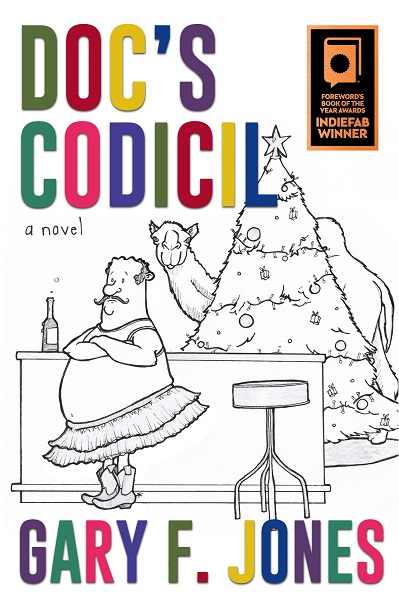
mediakit_bookcover_docscodicil

~ Blurb ~

* When Wisconsin veterinarian Doc dies, his family learns that to inherit his fortune, they must decipher the cryptic codicil he added to his will—“Take Doofus squirrel-fishing”—and they can only do that by talking to Doc’s friends, reading the memoir Doc wrote of a Christmas season decades earlier, searching through Doc’s correspondence, and discovering clues around them. Humor abounds as this mismatched lot tries to find time in their hectic lives to work together to solve the puzzle. In the end, will they realize that fortune comes in many guises?
* Doc’s Codicil is a mystery told with gentle humor. It tells the story of a veterinarian who teaches his heirs a lesson from the grave.

~ Excerpt ~

* The house was dark except for the pool of light thrown by a lamp behind my chair and small multi-colored Christmas lights surrounding the window on my left. The lights gave a dim but cheerful glow to the edge of the room. The crystal, silver, and pastel globes on the Christmas tree standing against the opposite wall reflected that light, and as the furnace kicked in, the reflections danced across the wall, betraying currents of warm air moving gently about the room.
* Heat, wonderful heat. I gave my wine glass a twist to celebrate feeling my toes again. The liquid ruby swirled round the glass, as I offered a silent toast to Mary, may she sleep soundly tonight. On the second glass, I was startled by a swoosh of air exhaled by the cushion of a wing-backed chair to my left. I glanced at the chair, but couldn’t bring it into focus. Contacts must be dirty, I thought and returned to my book.
* I . . . poured a third glass. This had to be the last. Tomorrow would be another fourteen-hour workday. I took another bite of Stilton, crumbly yet creamy, a pungent and savory blue with a background of cheddar, when I heard a throat clear.
* I put my book down and looked around the room. Empty.
* . . . A shadow moved in the dining room . . . “Who’s there? What the hell is going on?” I whispered.
* A man’s voice came from the kitchen. “Cripes, some host you are.”

Buy Doc’s Codicil here…
Amazon | Barnes & Noble | BQB Publishing

Find Gary F. Jones here…
Facebook | Goodreads | LinkedIn | Twitter | Website
garybanner

Thank you for joining us here today, Gary F. Jones! It was a pleasure getting to know you and your story.

ANNOUNCEMENT! Gary F. Jones will be awarding a $20 Amazon or Barnes and Noble GC to a randomly drawn winner via rafflecopter during the tour! So be sure to leave a comment AND use this RAFFLECOPTER LINK to enter the drawing. Also, visit the other tour stops for a greater chance of winning!

Welcome to Sally Wright w/ #mystery #book ‘Behind the Bonehouse’ @Sally_Wright5 @GoddessFish

vbt_tourbanner_bhindthebonehouse

Today we have author Sally Wright visiting. Welcome!

What would you like to tell readers about yourself?
mediakit_authorphoto_behindthebonehouse

* Edgar Alan Poe Award Finalist Sally Wright has studied rare books, falconry, early explorers, painting restoration, WWII Tech-Teams, the Venona Code, and much more, to write her university-archivist-ex-WWII-Ranger books about Ben Reese, who’s based on a real person. Breeding Ground, Wright’s most recent novel, is the first in her new Jo Grant mystery series, which has to do with the horse industry in Lexington, Kentucky. Wright is now finishing the second Jo Grant novel.
* Sally and her husband have two children, three young grandchildren, and a highly entertaining boxer dog, and live in the country in northwestern Ohio.

Today Sally Wright will be talking about books she read that had a big impact on her.
* I know I loved the story about otters playing on a river bank in a book about all kinds of animals called The Crooked Little Path (which must be decades out of print) that both my parents read to me. I wanted it read over and over, and I can still see my dad, in a wingback chair, falling asleep with the book in his hands.
* Winnie The Pooh, read by my mother, who – though she probably never recognized it – was one of the world’s great natural born readers. She couldn’t have done accents or dialects, but she had a deep grasp of the subtlety in the characterizations that A.A. Milne managed. She saw the wonderful humor in his depictions of the self-delusions of Eeyore and Rabbit, and Pooh and Piglet and Roo, and certainly Tigger too, and she could read about them in such a kindly, and yet pointed way, that a little child saw the humor too. She used the stories to teach me about human nature, with gentleness and sympathy, while calling a spade a spade, and discussing what the writer was telling us so I could learn to apply it to me, as well as others too.
* My grandfather read me all of the Laura Ingalls Wilder books – Little House In The Big Woods, Little House On The Prarie et. al. – in the early fifties, when I was young, even after I knew how to read, and I know I loved those.
* So. Having hedged the question, what was the first book that had a big impact on me? I think it’s hard to limit it to one from this great distance. I read Nancy Drew and the Hardy Boys, but secretly thought they were all a bit lame. I read Les Miserables, and was greatly moved by that, plus the Three Musketeers and the rest of that series, which actually left me cold, in the long run, aside from the thrill of the adventures. The Man In The Iron Mask made a definite impact. It made me think about revenge long and hard. And Daphne Du Maurier’s Rebecca in particular, made me obsessed with place. Setting is super important to me, and I think that book made me consider it deeply, especially once I’d read her autobiography, though I read her other books as well. I read a lot of Margaret Laurence in high school, and Dorothy L. Sayers starting about then, having not been terrible interested in Agatha Christie because I found the supporting characters pretty much cardboard cutouts. When I started writing mysteries myself, then I paid better attention to Christie’s mastery of plot.
* Sayers’ Wimsey, I thought, got better and better as the plots got longer and more complex, when his language got less encrusted by the excesses of the twenties, and Harriett Vane appeared on the scene.
* So have I answered your question? Not very well, even though I’ve limited myself to my early years of reading. Some of my very earliest memories are definitely about books and their effect on me, both while I’m reading them, as well as the lasting impact, once I’ve mulled them over.
* I know I wanted to be a writer by the time I was five or six. But then that shouldn’t have been a surprise. I’m the kind of person who sees something on the street, or has an interesting conversation, and I can’t wait to tell someone else the story of what happened. Which is what it means to be a storyteller, and why I do what I do.
* Everybody isn’t like that. I can see it on my kids’ faces, when I launch into a tale of something I can’t wait to share, and they smile and roll their eyes, and all but pat me on the back.

A look into…

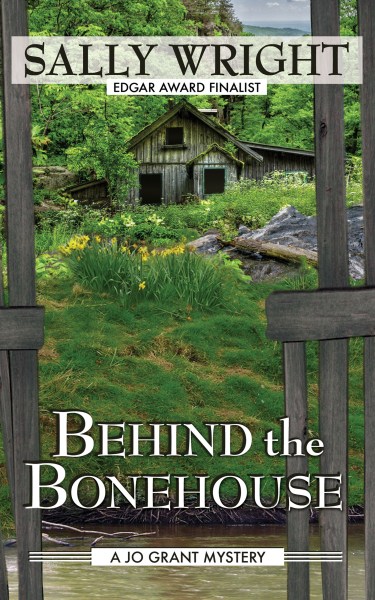
mediakit_bookcover_behindthebonehouse

~ Blurb ~

* It wasn’t until thirty years after the attacks, and the lies, and the intricately orchestrated death, that Jo Grant Munro could bring herself to describe it all in Behind The Bonehouse. Her work as an architect, and the broodmare farm she ran with her uncle, and her husband Alan’s entire future – all hung by a thread in 1964 in the complex Thoroughbred culture of bluegrass Kentucky, where rumor and gossip and the nightly news can destroy a person overnight, just like anywhere else. It was hatred in a self-obsessed soul, fermenting in an equine lab, boiling over and burning what it touched, that drove Jo and Alan to the edge of desperation while they fought through what they faced.

~ Excerpt ~

* When I was lying in the hospital three months or so ago, after the boys and their children had gone home, Alan came back and kissed my forehead, and said, “It’s time you wrote it down.” He handed me a spiral notebook. Which I set on the bedside table without saying a word.
* I didn’t have to ask what he meant. Even after I’d finished writing Breeding Ground, when I wanted to tell a whole lot more of what we’ve watched here in horse country, this memory wasn’t one I could touch. And what you won’t look at festers, especially since I’d been putting off lancing it for a good many years with conscious intent.
* Once I got home, and got stronger again, I got busy with every other part of my life. Till one night I dreamt about the river, and woke up sick and sweating, and it came to me, the way it always has, when I’ve made a decision in my subconscious mind, that the time had come to get it done.
* It started thirty-two years ago, months before the wounding in the river, when the Woodford County Sheriff Alan and I saw as a friend stood right here on the family farm saying words that tore our lives asunder without looking us in the eye.
* It’d grown out of something we’ve all had happen—lies getting told about you by someone with implacable intent. Malicious intent, in this case, because it was no misunderstanding. It was someone setting out to twist the truth toward his own perverse purpose. It was his word and deeds against ours, which has always been part of living in this world, and will be till the last of us gets over being human.
* I’d just turned thirty-four when it happened, and I didn’t have the experience then to put it in perspective. I need to try now, while I still can, because the disease that’s started eating into me makes delay a kind of denial.

Buy Behind the Bonehouse here…
Amazon

Find Sally Wright here…
Facebook | Twitter | Website

Thank you for joining us here today, Sally Wright! It was a pleasure getting to know you and your story.

ANNOUNCEMENT! Sally Wright will be awarding copies of several of Sally Wright’s books to a randomly drawn U.S. (only) winner via rafflecopter during the tour! So be sure to leave a comment AND use this RAFFLECOPTER LINK to enter the drawing. Also, visit the other tour stops for a greater chance of winning!